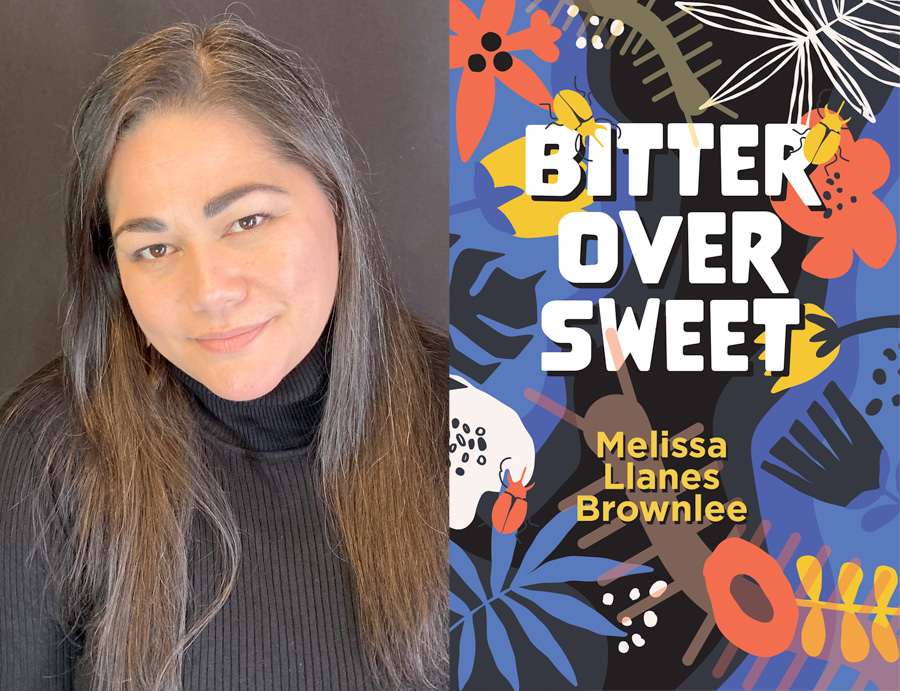
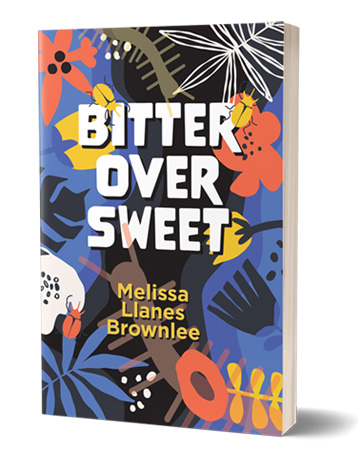
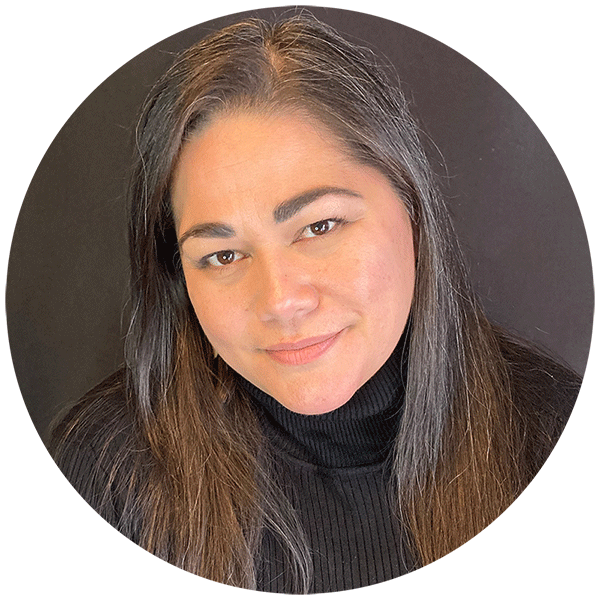
Melissa Llanes Brownlee is well known in the flash community as a consummate writer and an unflagging supporter of her peers. Her upcoming collection, Bitter Over Sweet, explores the lives of native Hawaiians struggling to get by in a tourist’s paradise.
Coming in early November from publisher SFWP, the book is already collecting kudos, being named one of Ms. Magazine's Most Anticipated Feminist Books of 2025 and landing a spot on CLMP’s Reading List for Asian/Pacific American Heritage Month 2025. Library Journal says Bitter Over Sweet “will appeal most to devotees of flash fiction. Brownlee’s stories do not shy away from the ugly truth, but they also highlight resilience and possibility.”
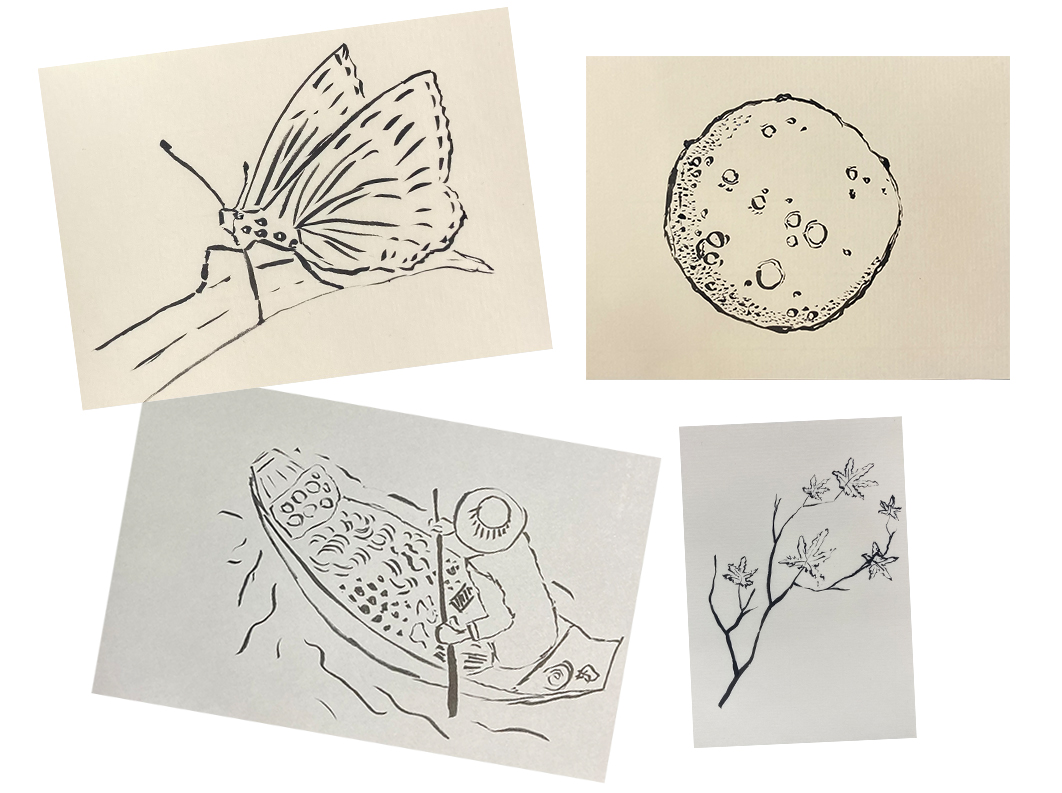
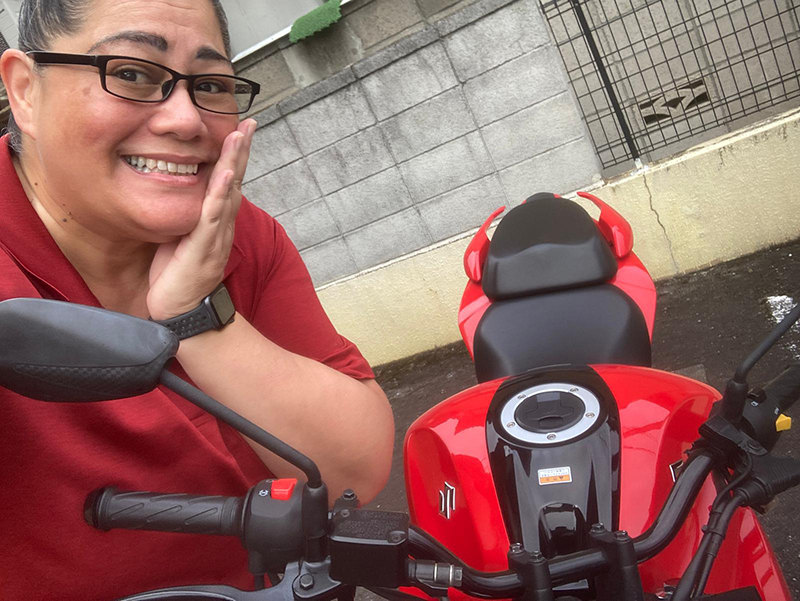
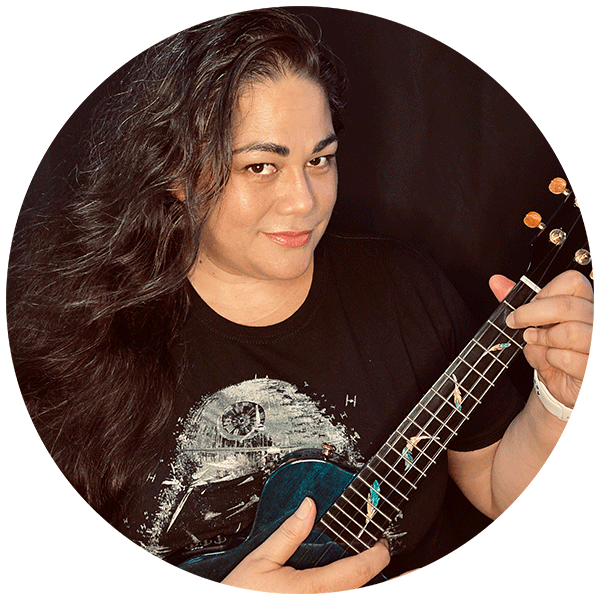
Melissa, a native Hawaiian writer living in Japan, received her MFA in Fiction from the University of Nevada, Las Vegas. Her work has been widely published in literary journals and magazines, including Prairie Schooner, The Rumpus, Cincinnati Review miCRo, Indiana Review, Craft, swamp pink, Moon City Review, Wigleaf, Cutleaf Journal, and others. She just learned to ride a motorcycle and you can find her driving through the Japanese countryside on the weekends. She doodles at @lumchanfa and plays her ukulele at @lumchanukulele on Instagram. She also tweets at @lumchanmfa and talks story at melissallanesbrownlee.com.
Melissa teaches writing workshops and serves as senior submissions editor for Smokelong Quarterly and co-editor of Literary Namjooning. Thanks to Melissa for taking time to share her thoughts with us!
WOW: Welcome, Melissa! Congratulations on the fantastic pre-release accolades for Bitter Over Sweet! Tell us about the collection. What themes do you explore? Who are your characters, and how do you connect with them?
Melissa: Mahalo! Thank you so much. In most of my work, especially, anything set in Hawai’i, I tend to focus on poverty, systemic racism, classicism, religious indoctrination…you know, all of the things a native person who grows up in a colonized culture deals with. I keep circling these themes through my every-girl character, “Tita.” Tita is a Hawaiian Pidgin Creole word, most likely a derivative of sister, that can be used positively or pejoratively, depending on how it’s pronounced. In this case, it’s positive and used as a nickname for most girls. Many of my stories are about Hawaiian girls and women so you could say they are about me and the women in my life, but not.
WOW: As a reader, I appreciate finding Tita woven throughout these stories, which brings me to another thing I love about your writing: the front-and-center presence of Hawaiian culture. The landscape, the mythology, and the sense of both hope and desperation come through so clearly. I’m particularly drawn to your use of language. It is gorgeously rendered and serves as a powerful immersive tool. I’m curious about the initial reaction from editors, especially those who might not already be familiar with your work. Have you received pushback on your language choices? Are you seeing any changes in the way mainstream editors and readers view the use of other languages?
Melissa: Language molds us, right? It shapes the way we speak and think. Pidgin is my mother tongue. It’s the language I used with family and friends growing up. So, when I decided to start writing about Hawai’i, it just seemed natural to include it in my work.
Of course, the first time I ever received any negative feedback on a story that used it was in a workshop during my MFA. This person insisted I needed to include a glossary and that just upset me. I hadn’t written the entire story in Pidgin. It was mainly dialogue and the context clues allowed the reader to understand what was being said, or at least that was my hope.
I didn’t listen to this person, but it made me realize that not everyone would be so welcoming. I was prepared for it if it ever happened again, but you know what? It didn’t. At least not in any rejections I have ever received. And when a piece gets an acceptance, I may get editorial suggestions, and if it concerns the use of Pidgin, I will explain why a phrase or word is required and may add a brushstroke or two to help with context if necessary.
Also, I think it can be a risk for mainstream editors to invest in a writer who uses other languages within their English narratives, but if Cormac McCarthy can write pages of Spanish in his work, then why can’t I write in Pidgin? I encourage any writers whose mother tongue is not English to experiment with using it in their writing. It is freeing and may allow you to tap into something deeper. And for those whose mother tongue is English, consider the dialect of your region, think about how the words and phrases of your youth shaped you. In the US, only broadcast English is standardized. Everything else is dialect.
“I encourage any writers whose mother tongue is not English to experiment with using it in their writing. And for those whose mother tongue is English, consider the dialect of your region, think about how the words and phrases of your youth shaped you.”
WOW: Great advice! And it’s an approach that obviously works so well for you. For instance, the final piece in the collection is titled “Oh my god your voice sounds so haole.” This breathless micro pulls the reader into the schism between an islander living on the mainland and his family back home. The urgency of the piece sings with a single long sentence building tension as it progresses, with no punctuation to interrupt the flow. With lines like: “I worry I’m making a mistake jus make sure you leave your haole high maka maka shit up dea, or else the threat ringing in my ear as I hang up,” it’s clear the language serves as a symbol of this family’s separation. What were your goals when you began writing this piece? Do you feel this sort of pull between the different cultures you inhabit?
Melissa: This is a literal quote from an actual phone conversation I had with someone from Hawai’i. It still bothers me. Even today. I haven’t lived in Hawai’i since I left in 1999. I would say this conversation happened in the early 00s. I had been going to Boise State at the time and was planning a trip home and talking to someone about my plans and I guess I forgot to code switch in the conversation, so I had basically committed a social faux pax because I wasn’t talking in Pidgin.
I will say that I grew up learning that Pidgin was for poor, uneducated people, so was “trained” out of it, but if I didn’t use it in the correct social circumstances, I could have been easily ostracized, and by this, I mean I could have been shunned, or have to fight someone, or be considered, as in this case, too haole, or too good for the person I was speaking to. It was a weird tightrope to walk as a child.
WOW: That tightrope-tension really powers your collection. I’m blown away at how evocative these stories are, which is especially noteworthy due to their brevity. Almost all the stories in Bitter Over Sweet fall into the microfiction category, stand-alone stories that come in at less than 400 words. What about this length appeals to you?
Melissa: It’s funny. I have always written short. Even before flash and microfiction became categories. I think they were still called sudden fiction back then. I have always been drawn to the short form. I had to force myself to write anything longer than five pages and a lot of that was due to pressure from my MFA workshops. “All real short story writers write 3500 – 5000-word stories.” So I figured there was something wrong with me because I just didn’t feel comfortable writing to those lengths. I did it a few times and I think those stories were good, but for me the stuff I write under 400 words just sings. There is power in compression. I find micros linger much longer and also allow for multiple readings for even more depth and understanding.
Also, there are threads and themes I keep coming back to, and micros let me touch on different parts of them and when they are placed together in a collection, they build upon each other, like a resonance chamber.
“There is power in compression. I find micros linger much longer and also allow for multiple readings for even more depth and understanding.”
WOW: I found that resonance in your previous collections, too. Hard Skin (Juventud Press, 2022), introduces a cast of children and young adults navigating the joy, anger, and frustration of their lives. I am especially touched by the book’s dedication: “For all the island kids dreaming of more.” How did this collection come about? What inspired you?
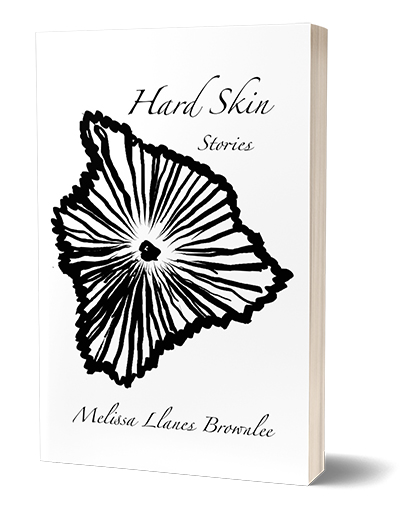
Melissa: It started at Boise State when I took a fiction workshop from Anthony Doerr. He inspired me to write about Hawai’i, and I wrote “Uncle Willy’s Harbor” which got me into UNLV’s MFA program. I continued writing a few more stories, all set in Hawai’i, throughout my time at UNLV. I submitted my manuscript and graduated, and then I stopped writing for six years. Not a single story that I had written up until I graduated in 2008 had ever been submitted or published. This was before online submissions were much of a thing and sending work through the mail just seemed like a lot of work for little return for a newbie writer like me.
Eventually, I started writing again and wrote a few more stories, and more importantly, I started submitting my work. Every story in Hard Skin was published before I considered submitting it as a whole…and let me tell you, it took five years for it to be accepted for publication. Five years. It had placed in a contest or two but there was no prize or offer of publication—but at least I knew my work had been recognized. Eventually, I saw that FlowerSong Press (the main publisher of the imprint Juventud Press) was accepting collections, but it was “no simultaneous submissions” so I said what the hell and pulled it from everywhere else and tried my luck and they accepted it in a few weeks. I was ecstatic.
WOW: Kudos for your perseverance! I also want to ask about your novella-in-flash, Kahi and Lua: Tales of the First and the Second (Alien Buddha, 2022). This book combines mythology and pop culture, reinventing the mythical Hawaiian gods Kahi and Lua in a modern landscape. What do these gods think of life in today’s Hawaii?
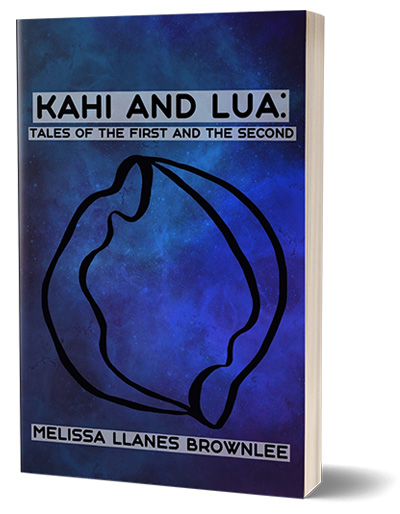
Melissa: I will be honest. I took a lot of liberties with the Hawaiian creation chant, the Kumulipo. These creations of mine aren’t truly part of the pantheon. I was playing more with this idea of gods being creators and creations of humanity, a weird cyclic conundrum, like the chicken and the egg. I wanted characters who could look at humanity but also participate in its foibles. They allowed me the freedom to comment on pop culture, on religion, on Hawai’i, on myth, on our need for them to exist. Weird, right?
WOW: Your weekly newsletter and YouTube channel often give me a hit of inspiration. Whether it’s hearing about your latest success or listening to a fun song, I always leave your site with a smile. Of course, you also share your challenges and frustrations, which is a great reality check for so many writers. What prompted these missives? Do they inspire you as much as they inspire me?
Melissa: Thank you!! I started my website because that’s what you were supposed to do as a published writer, right? And I started my talk story blog, because I thought it was something that writers needed to do to promote themselves, and I figured if I was writing something every week, I would just be honest about my journey as a writer, as a woman, as a person just living my life. I guess you could kind of call it my journal.
WOW: Drawing is also part of your journey, isn’t it? Your doodles are so much fun! They grace your website and the cover of Hard Skin. You even used them as prizes in a recent fundraising effort! Do you ever sell your works? Might a picture book be on the horizon?
Melissa: I love my doodles, too. Sadly, I took a break from daily doodles a year or so ago and you are inspiring me to start it back up again. I have done art for my own books and stories as well as for literary magazines like Flash Frog. I have never even considered a picture book. What a wonderful idea. Don’t know if I have the brain space for another project but you never know.
WOW: Speaking of brain space, you are really busy! In addition to your own writing, you serve as senior submissions editor for Smokelong Quarterly and co-editor of Literary Namjooning. What does that work entail? What do you enjoy the most about these roles?
Melissa: First, I want to say that I think all writers should work at a magazine or journal at least once in their careers. Being on the other side of the process offers a little more clarity and balance to our writing lives. I know it’s not for everyone, but I think the experience will make you a better writer.
I have been a submissions editor at Smokelong Quarterly for a few years, and I was added to the senior staff in May. When I started, I read submissions blind with a partner. I think it’s one of the fairest ways to read subs. Now that I am a senior editor, I assist with feedback, help decide contest winners as well as what will be published. It’s wonderful to showcase amazing work.
Literary Namjooning began last year as a way to honor the founder’s sister and her love of BTS. I really enjoy being a part of this magazine. It’s so different from what I have been a part of before.
“I think all writers should work at a magazine or journal at least once in their careers. Being on the other side of the process offers a little more clarity and balance to our writing lives.”
WOW: What are you working on now, and what’s on the horizon?
Melissa: I am working on all the things one needs to do to promote their book but also trying to finish this novel that I have been working on for a year or two. It’s been a challenge. I’m also trying to stay involved with the online community as much as I am able but there are so many platforms now to maintain so I have been feeling a bit stretched thin by it.
WOW: One more thing before we wrap up: what color is your motorcycle? Does it have a name? (Oops, that was two final things!)
Melissa: It’s red! I call her Vash the Stampede after the main character in the anime Trigun. She’s so cute! And for any motorcycle fans, she’s a 150cc Suzuki Gixxer.
So, readers, I’m curious: does your specific regional or cultural dialect find its way into your writing? Do you draw inspiration from your non-English mother tongue? Maybe this is a technique to explore! Thanks to Melissa for sharing these thoughts with us!
***
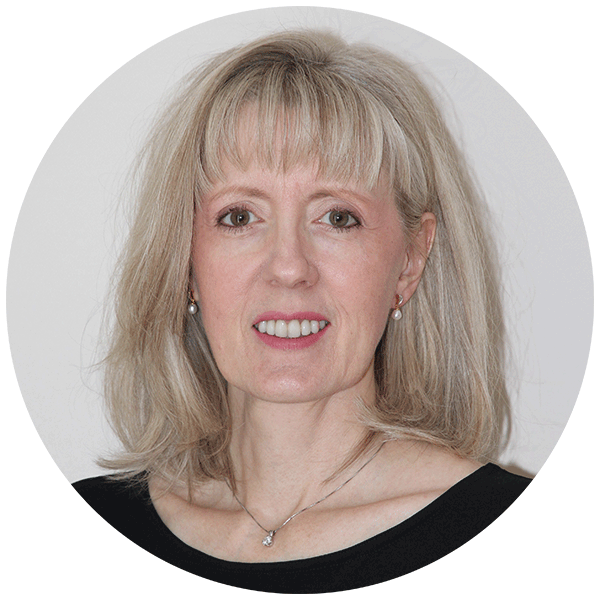
Myna Chang hosts Electric Sheep SF and publishes MicroVerse Recommended Reading. Her fiction has been selected for the Locus Recommended Reading List, the BSFA longlist, Norton’s Flash Fiction America, and several “Best Of” flash anthologies; her poetry recently received an honorable mention in the Rhysling Awards. Her micro collection is available from CutBank Books. Find her at MynaChang.com or on Bluesky @MynaChang.